
GAME ART GUIDE - BLOCKING OUT
INTRODUCTION
The blockout stage is the foundation of 3D environment and prop art pipelines for games. It converts 2D concepts or abstract design ideas into a simple 3D structural mesh before committing time to high-poly modeling, UV unwrapping, or texturing.
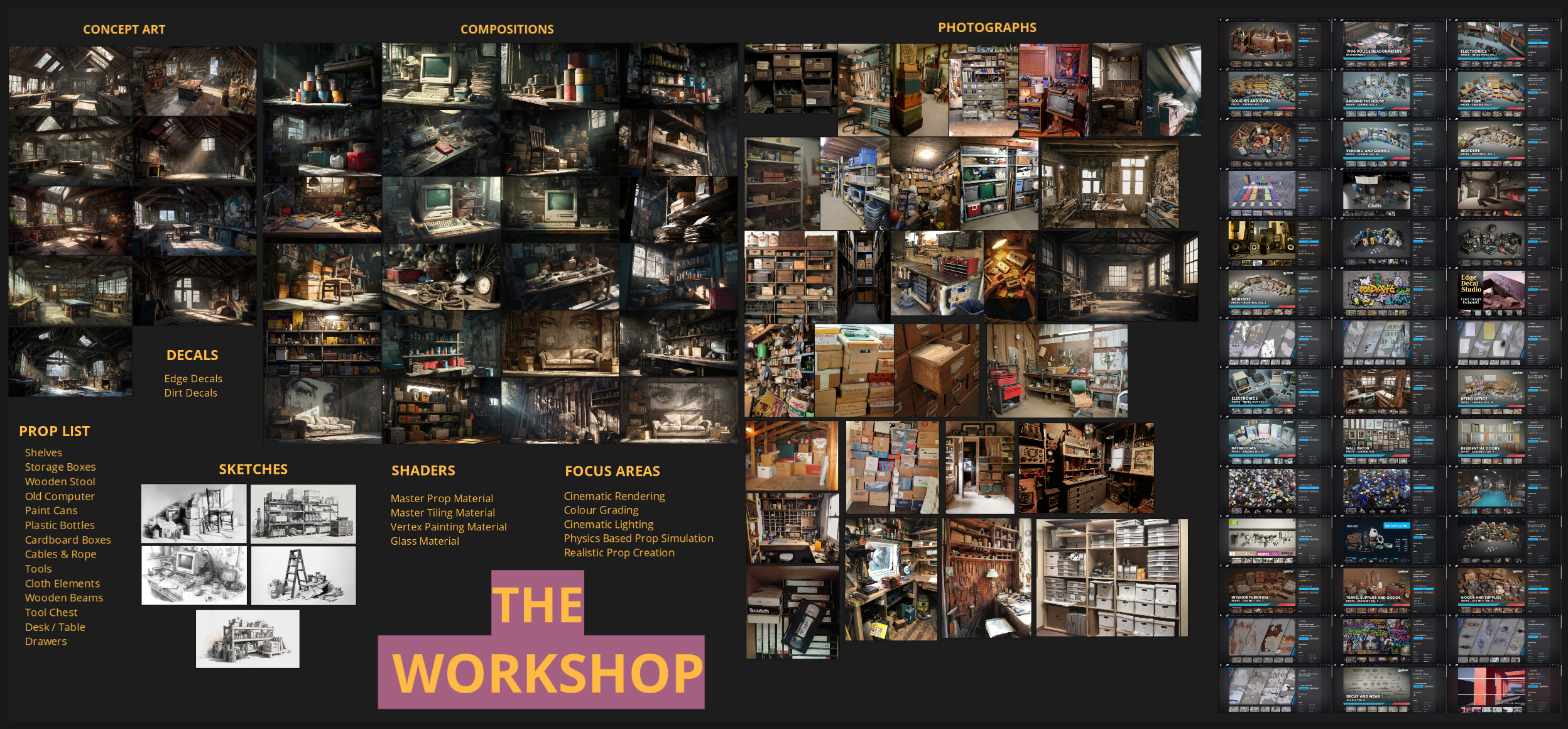
THE ROLE OF REFERENCE IN BLOCKOUT
Reference gathering serves as the objective anchor for the entire blockout phase, eliminating visual guesswork.
Proportion and Architectural Accuracy - Real-world references reveal standard dimensions (door heights, stair increments, window sills) that prevent assets from looking unnatural.
Silhouette Analysis - Breaking reference images into simple geometric breakdowns helps identify what primary silhouettes define the asset or scene.
Functional Context - Reference dictates how components fit together mechanically or structural-wise (e.g., how support beams connect to a wall, or how a scope mounts to a rifle).
CORE STAGES OF BLOCKOUT
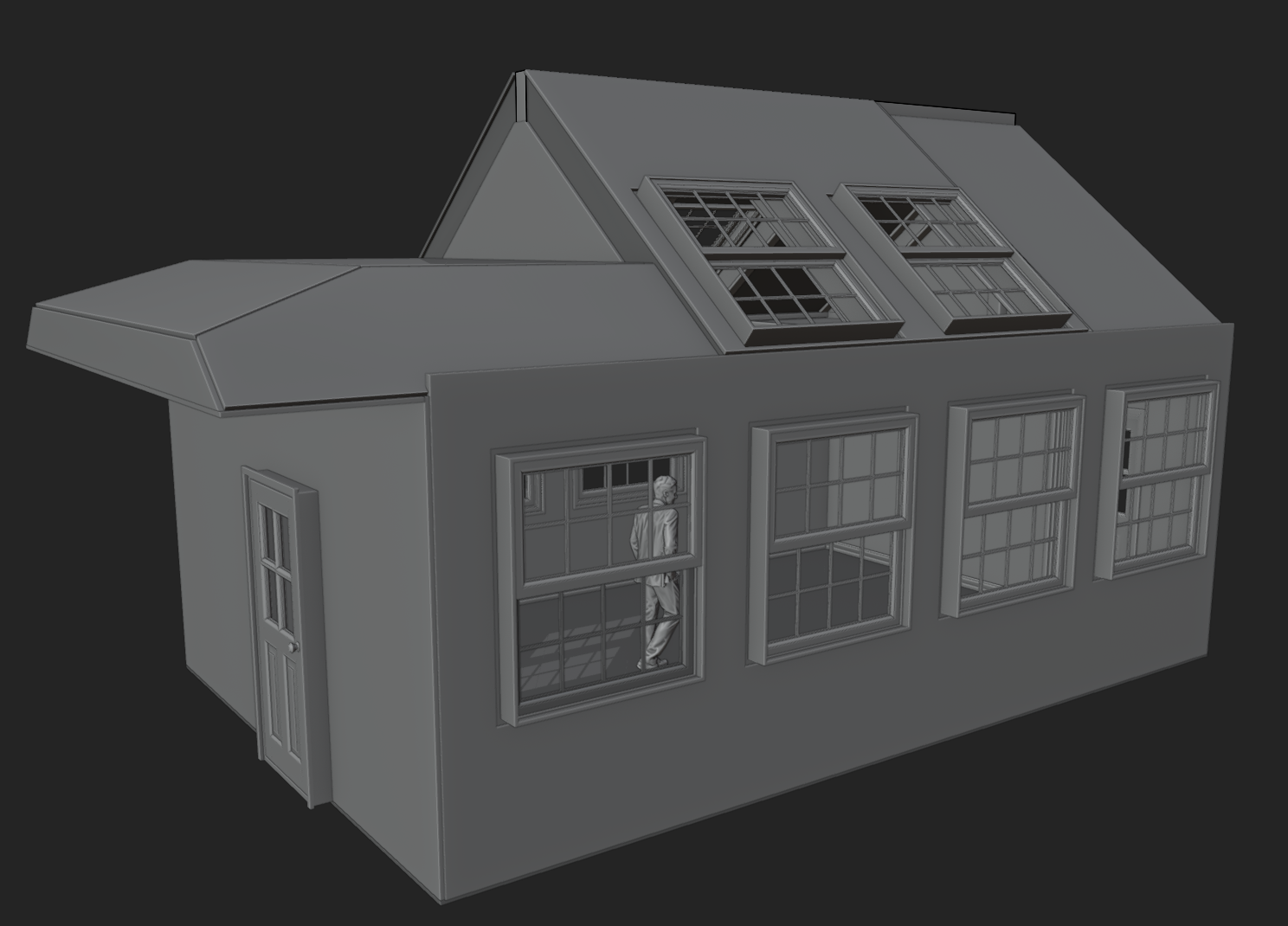
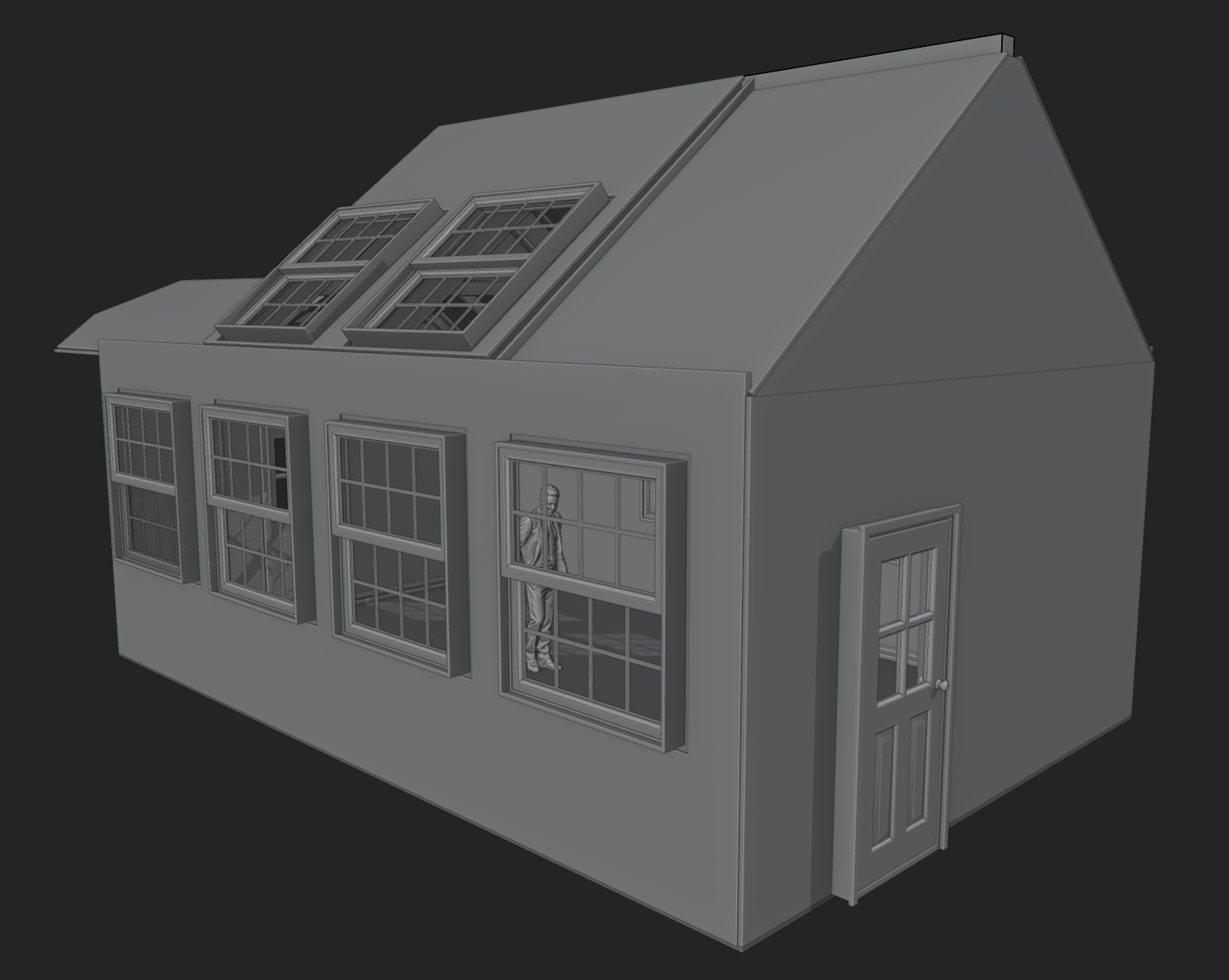
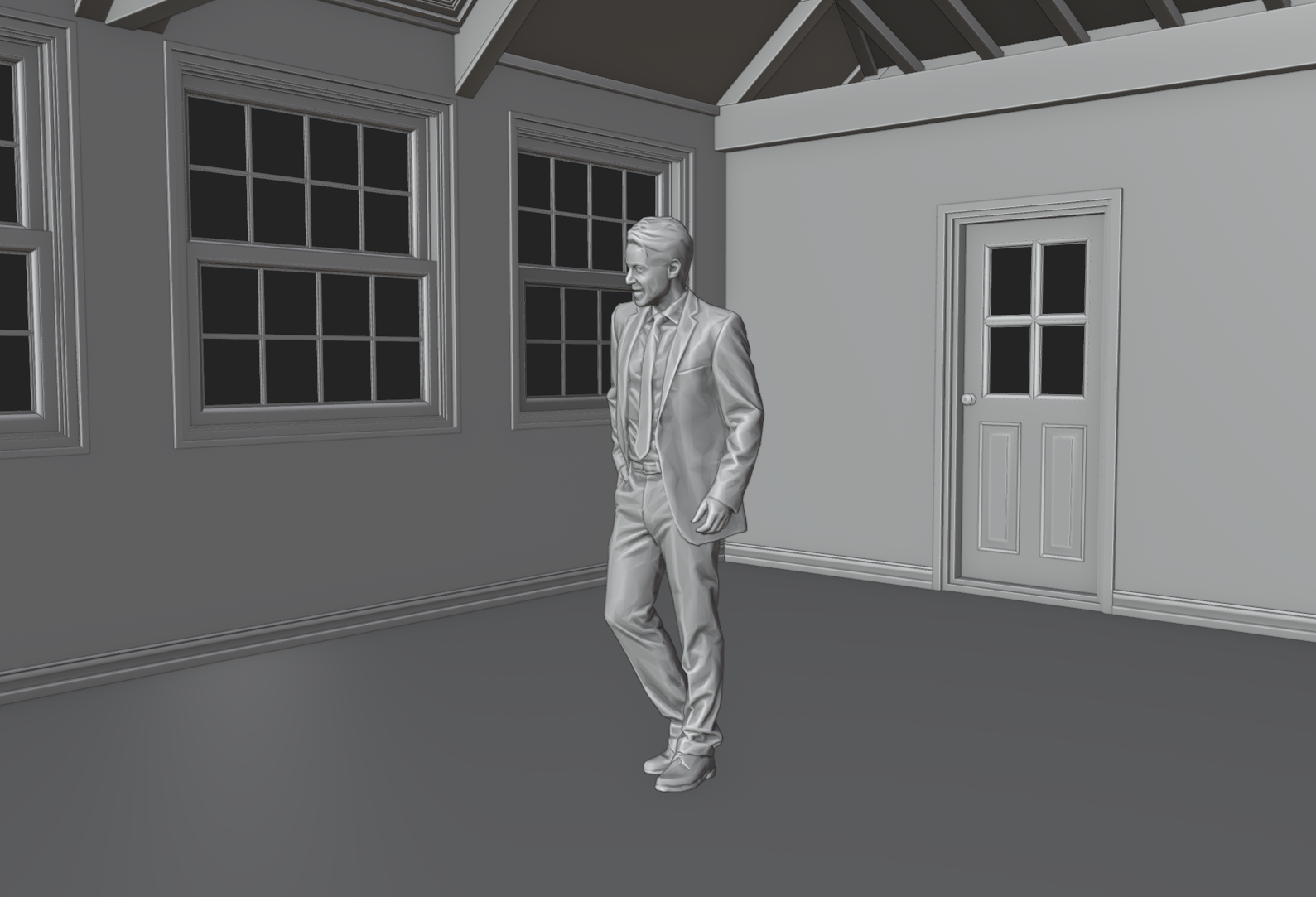
Scale Calibration - Scale Rig/Human Reference: Before placing a single primitive, import a standardized scale mannequin (typically 1.8 meters / 180cm tall) into the scene.
Engine Parity - Ensure the 3D software units match the target game engine (e.g., 1 Unit = 1 Centimeter for Unreal Engine).
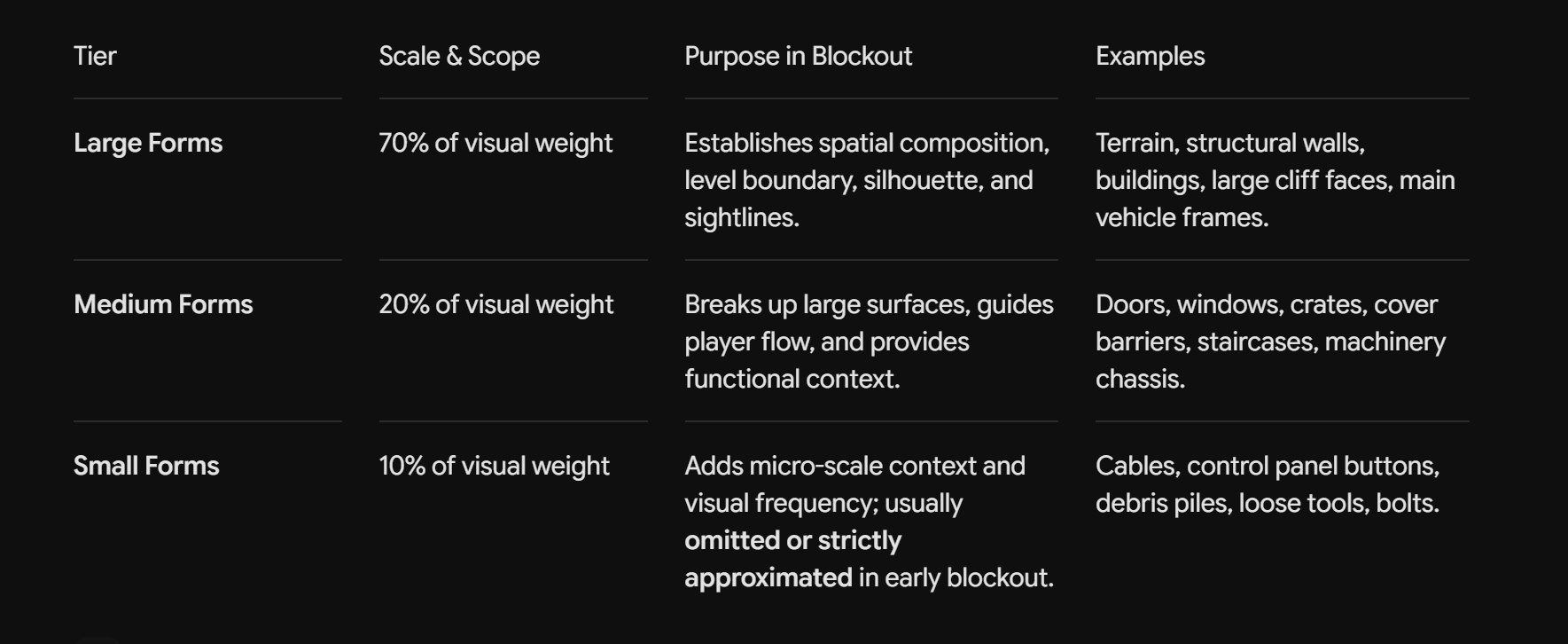
Shape Definition & Silhouette - Primary Shapes: Model the macro form using basic primitives (cubes, cylinders, spheres). Focus strictly on overall volume, balance, and readable silhouettes from gameplay camera angles.
Secondary Breakdown - Cut into primary shapes to define major angles, bevels, or structural breaks, without adding localized geometry or bevel details yet.
No Micro-Detailing - Avoid subdivisions, bevels, or complex topology at this stage to keep adjustments fast and non-destructive.
CONCLUSION
The blockout stages is vital in establishing the base shapes and forms associated with a given prop or environment. It is a vital first step in the creation of high quality art for video games.